


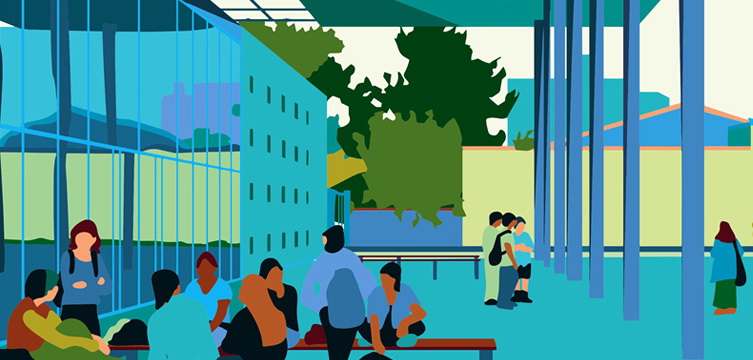

In my previous article, I shared how I arrived in France without speaking a word of the language and somehow ended up being nicknamed the "assistant math teacher." But beyond textbooks and equations lies the unexpected reality of everyday school life: erratic timetables, student walkouts at the school gates, biometric palm readers at the cafeteria, and soccer balls hidden in the bushes. In practice, a French lycée operates in ways that bear little resemblance to what I grew up with in Ukraine.
French Holidays and the Inevitable “Blocage”
The academic calendar here follows a different tempo. French students stay in school a month longer: June is a regular working month, and summer break does not kick off until July. That said, the trade-off is quite generous: instead of a single week off per term as in Ukraine, students here enjoy two full weeks of vacation every seven weeks or so.
Then there is the local protest culture. One morning in the fall, I arrived at the lycée only to find the entrance completely blocked. A dense crowd of students stood outside the gates with handmade signs, chanting and whistling, bringing access to a standstill. One of the organizers climbed onto a three-foot concrete block, firing up passing drivers who happily honked their horns in solidarity. In France, these school strikes—known as blocages—are an established ritual where teenagers voice their grievances, channeling the country's longstanding protest tradition.
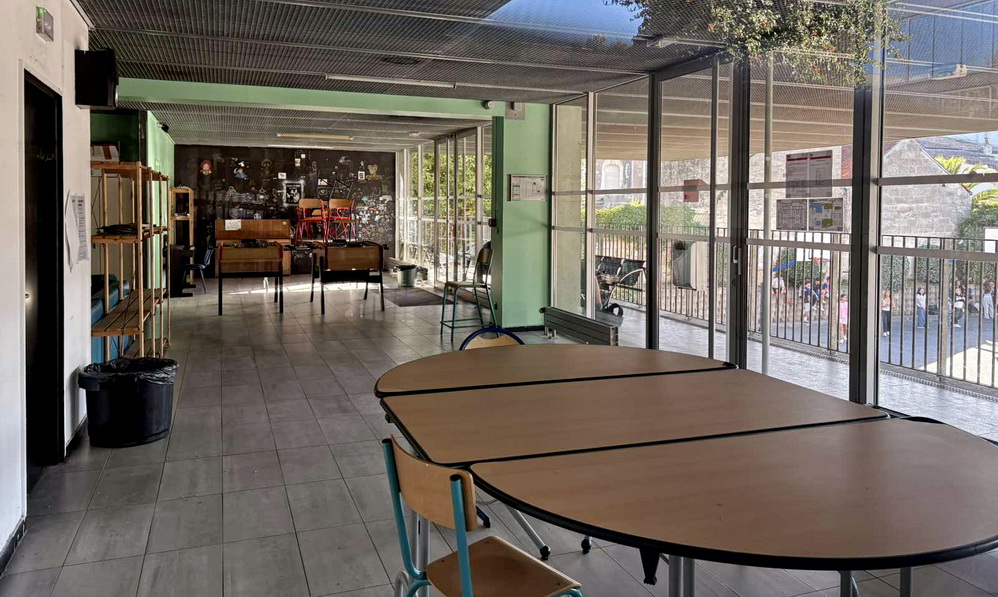
Inside, the building felt deserted—maybe ten or twenty students per floor at most. Deciding not to skip class, I went up to my room. Only three of us showed up, along with the teacher, who decided to proceed anyway. In a stroke of pure irony, it was a history lesson. We didn’t discuss modern street revolutions, though; we just stuck to the curriculum.
Tetris Schedules: Anywhere from 6 to 10 Hours a Day
The timetable here is the polar opposite of the Ukrainian school day, which typically runs reliably from 8:30 a.m. to 2:00 p.m.
Classes run for either one or two hours (for two-hour blocks, teachers usually offer a quick five-minute breather midway through). A school day can start at 8:00 or 10:00 a.m., and wrap up at 1:00 p.m. or stretch until 6:00 p.m.
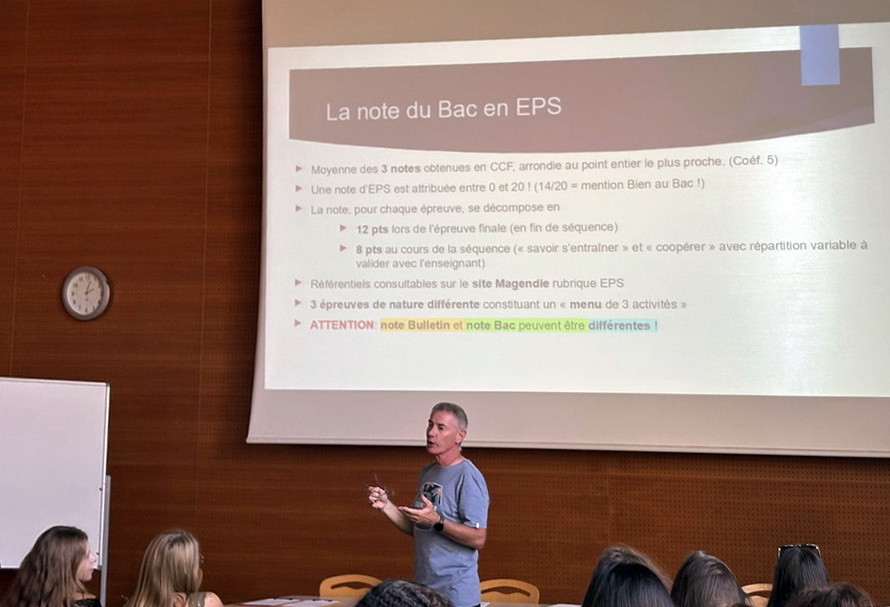
When I first transitioned into regular classes, an administrative mix-up assigned me to Spanish—a language I had never studied. That class happened to be scheduled at 8:00 a.m. on a day when my schedule already ran until 6:00 p.m. It took two weeks to sort out, during which I set a personal record by spending ten consecutive hours at school. On average, a regular day requires at least six hours on campus, including the generous lunch break.
Navigating the Maze: Ground Floors and Lettered Wings
Finding your way around a French lycée takes some getting used to.
First, floors start at zero. The level you enter from the street is the rez-de-chaussée (ground floor). What we call the second floor in Ukraine is the first floor here, our third is their second, and so on.
Second, campus wings are designated by letters: our lycée has four (A, B, C, and D). Room numbers combine a letter and a digit sequence where the first number indicates the floor. For instance, room B11 means Building B, first floor (the second level in Ukrainian terms), Room 1. Room A01 is Building A, ground floor, Room 1. Luckily, directional signs hang at the start of every corridor, which saves you from wandering aimlessly.
Giant Notebooks and the Four-Color Pen
Classroom gear and workflow come with distinct French trademarks:
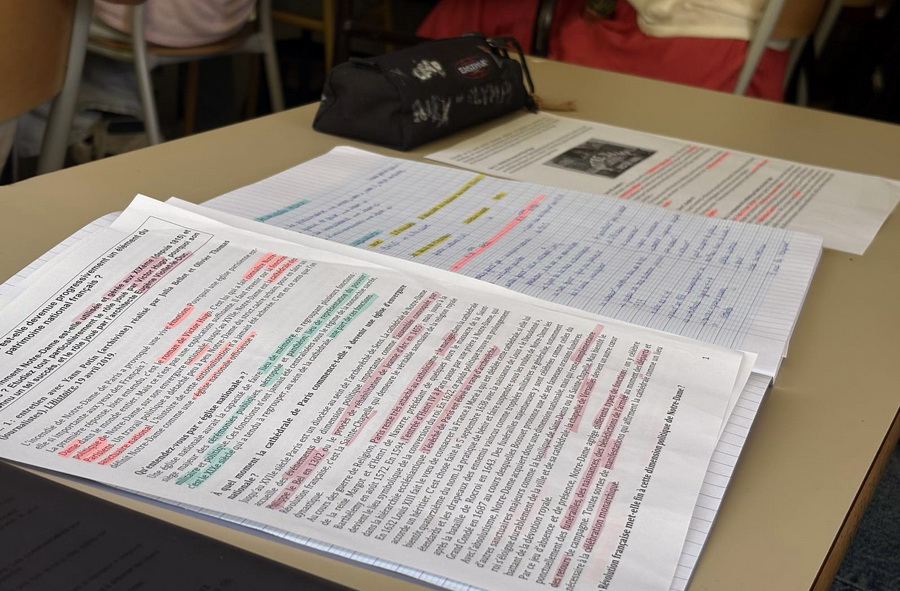
- Oversized notebooks (A4 and 24x32 cm): They are nearly twice the size of standard Ukrainian exercise books. School stationery aisles dedicate entire shelves to them, while smaller notebooks are hard to find.
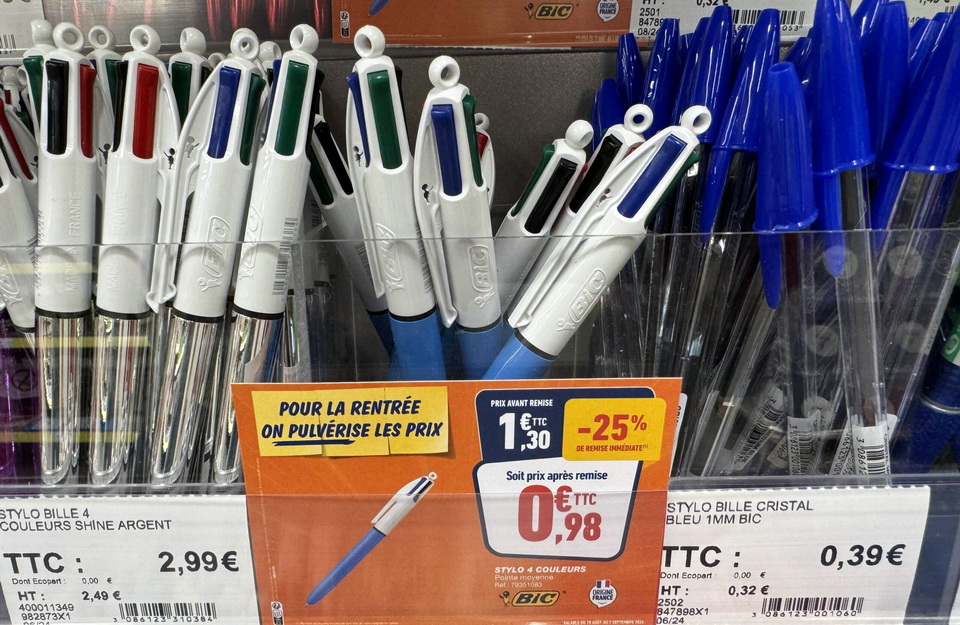
- The four-color pen: Black, blue, red, green—all in one barrel. It is the absolute staple of every student's pencil case, paired with highlighters to keep notes clear and color-coded.
- Handouts over textbooks: We rarely opened physical books. Teachers primarily hand out printed lesson sheets (polycopiés) at the start of each class. Without an organized folder or binder, you quickly find yourself buried under an avalanche of loose paper.
- Technology in class: Every classroom features a digital projector. In computer science, we had reliable workstations with personal logins and passwords. Our teacher took a practical, hands-on approach: we learned Python through an interactive coding platform, and whenever someone hit a wall, he would patiently walk them through the logic of their code.
The Cafeteria: Palm Scanner Access
The school cafeteria (la cantine) is far from a basic snack bar; it functions more like a structured dining hall. Every day, you pick up a tray with a main dish, a side, a drink, fresh baguette slices, and a dessert.
The menu rotates daily and offers well-rounded, wholesome food: roast chicken, beans, rice, and fresh vegetables, followed by yogurts, puddings, or fruit desserts.
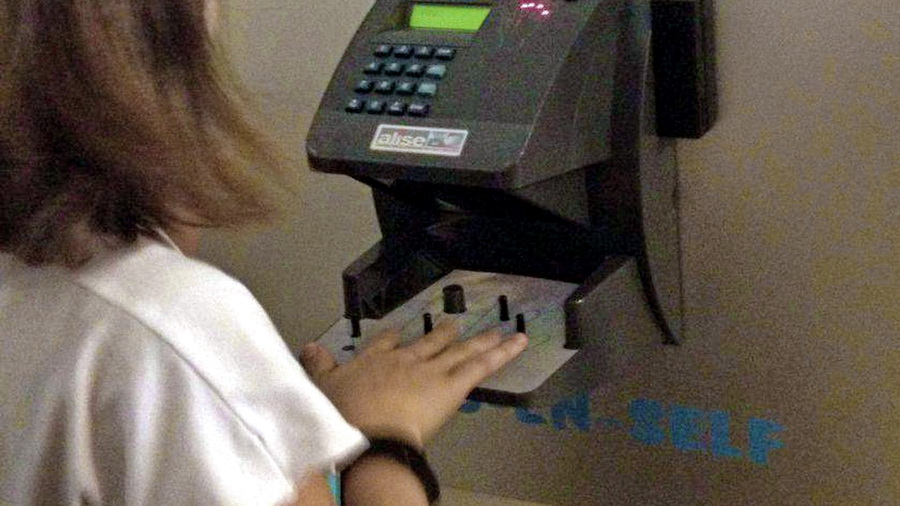
The most surprising part, however, is the security gate. At the start of the year, once the administrative forms are filed and meal plans paid, you are scheduled for biometric registration. To enter the cafeteria, you don't just tap a badge; you enter your PIN and place your hand on a biometric scanner that verifies your palm geometry. Whenever the scanner failed to recognize me—which happened a couple of times—the supervisor (surveillant) on duty would wave me through with a smile, as they had gotten to know me.
The Lunch Break: Library, Bushes, and Soccer Matches
The two-hour lunch break splits the school day down the middle. Once the first half hour of eating wraps up, the campus turns into an open courtyard with distinct hubs:
- Some head to the CDI (the multimedia library) to read in peace, catch up on assignments, or book a glass-walled study room for group work;
- Others lounge on courtyard benches, eating packed snacks or chatting with friends;
- I almost always sprinted straight to the sports field. Team sports were the best way to reset between classes. We played volleyball, shot some hoops, but mostly set up fast-paced soccer games.
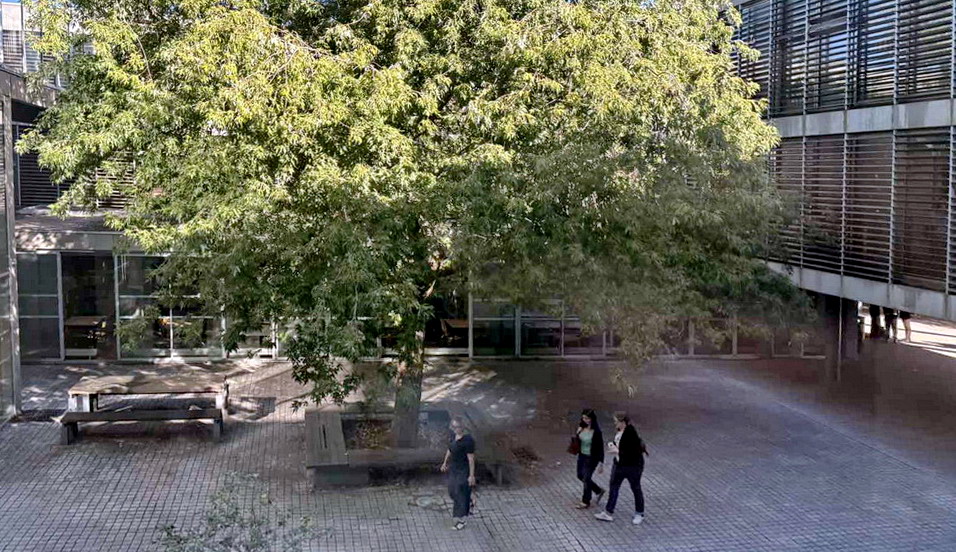
The school’s balls are only handed out by the PE teacher thirty minutes into the break. Regular players, however, have their own workaround: those who bring a ball from home stash it in the courtyard bushes first thing in the morning rather than carrying it between classes all day. The bell rings, the ball is retrieved in seconds, and an intense match is already underway before anyone else has even formed a line.







Залишити коментар