










In the frontline communities of Donetsk and Dnipropetrovsk regions, two irreconcilable realities are unfolding simultaneously.

The first exists across social media feeds and Telegram channels operated by politicians and affiliated charitable funds. It is saturated with pathos, dramatic soundtracks, and daily self-congratulatory dispatches: frames filled with exhausted people clutching duffel bags, tearful children holding soft toys, volunteers in body armor, and the ubiquitous caption: “Another critical mission accomplished.”

The second reality is etched onto the official stationery of military administrations. It is dry, uncompromising, and records the comprehensive institutional collapse of the shelter system.

A comparative analysis of the official response from the Dnipropetrovsk Regional Military Administration (RMA) and the media serial staged by Member of Parliament Maksym Tkachenko and Oleksiy Bakhtin, head of the “Kryla Donbasu” charity fund, demonstrates what truly happens to evacuees once smartphone cameras are switched off, and why the prime vehicle for this PR machine turned out to be an automotive ghost.

Act 1. “The Universal Prop”: How a Single Van Covers All Agendas

The centerpiece of the September 2026 promotional content circulated by the “Kryla Donbasu” fund and Oleksiy Bakhtin is a white Volkswagen Transporter utility van featuring prominent “VPO UKRAINE” branding on its hood, a hotline telephone number, and British-style foreign number plates reading AJ54 USE.

An audit of social media posts throughout the first week of September 2026 illustrates the vehicle's rapid transformations:

September 1 (Sloviansk): The van stands outside the railway station surrounded by stacked boxes of MySling gear and BD Discardit™ II medical supplies. Stated narrative: delivering medical supplies to the unmanned systems unit of the 18th Sloviansk Brigade of the National Guard of Ukraine.

September 4 (Kramatorsk): The identical vehicle carrying the exact same registration is suddenly rebranded as civilian evacuation transport.

A woman and a man pose beside the hood next to a suitcase. Caption: “Evacuation of the civilian population from Kramatorsk. Working for life.” A few minutes later, the same woman is photographed from a different angle, still positioned against the VPO Ukraine vehicle. Shortly after, a photo of the same man appears, this time against a backdrop of local roadside trees.

September 5 (Kramatorsk): A sequence of solitary snapshots: an elderly man holding a half-empty plastic grocery bag, followed by an elderly woman with a walking stick devoid of any travel luggage, each posed before the front bumper in a residential neighborhood as purported evidence of ongoing “large-scale evacuation.” 

Another image from the same day features a woman in a grey cardigan standing before a residential building.

The composition of these photographs reveals the mechanics of the operation: piecework “evacuation” manufactured exclusively for content. Three isolated seniors (the woman in grey, the elderly man with the flimsy plastic bag, and the woman with the cane in a red jacket) are staged in front of bumper AJ5... USE without the basic luggage required for interregional relocation. Civilians evacuating 250 kilometers to establish a new life in another province do not depart without travel bags, bedding, or personal belongings. These images depict local urban transport runs (to an outpatient clinic, an administrative office, or an adjacent neighborhood), coupled with mandatory staged poses before the vehicle's hood to check off an item in an activity log: “Evacuation. Kramatorsk 05.09.2026.”

September 6 and 7 (Kramatorsk): The assembly line continues in front of the same bumper. First, elderly residents with woven market bags and cat carriers; then the same individuals relocated beside a roadside fence, keeping the VPO Ukraine vehicle in view.

The following day, teenagers and children clutching stuffed toy geese are photographed alongside Bakhtin himself, accompanied by text detailing the deteriorating security climate in Kramatorsk.

A subsequent frame shows the same family grouped behind the vehicle without Bakhtin.

September 7 (Evening): In a Reels video upload, the operational claim shifts: the caption now reads “EVACUATION. SLOVIANSK AND KRAMATORSK.”

September 8 (Sloviansk): A new video presents yet another narrative arc. Alongside the standard shot by the hood, a sensitive personal mission is introduced: “Assisting a family in locating a service member reported missing in action during combat operations in Vovchansk, Kharkiv region.”

September 9 (Morning): The daily evacuation dispatch reaches the point of parody, relying on pre-recorded footage passed off as live morning updates. On the morning of September 9, the fund simultaneously reported two distinct missions: one in Kramatorsk and another in the Cherevkivka neighborhood of Sloviansk. In the accompanying video, a woman appears with two children. An on-camera slip-up and her son's reaction expose the rehearsal failure: the mother opens with a greeting of “Good evening,” prompting the boy to duck his head to suppress a laugh.

This confirms the material was recorded the previous evening and held in reserve to populate the following morning's social media posting window. A companion photo from Kramatorsk showing a woman in a light blue cardigan features telling lighting: low-angle evening sunlight penetrates the tree canopy, illuminating the upper stories of an adjacent brick apartment building in warm golden tones. This represents the sunset Golden Hour, entirely distinct from the diffuse morning light of an early September dawn in eastern Ukraine.

The simultaneous morning presence in Kramatorsk and Cherevkivka, posted minutes apart—“Evacuation. Kramatorsk 09.09.2026” (a woman with two plaid bags before a building entrance) and “Evacuation. Sloviansk — (Cherevkivka) 09.09.2026” (a mother and two children with schoolbags beside a private fence)—highlights the geography. Cherevkivka is a southern suburb of Sloviansk directly bordering Kramatorsk, separated by roughly 10 to 12 kilometers of roadway. The vehicle merely shuttles along the margins of adjacent municipalities, pulling up to gates and entryways to capture different photographic angles, manufacturing the appearance of continuous operations across diverse locations.

Basic road logistics dismantle the premise of regular interregional evacuation runs. The driving distance from Sloviansk or Kramatorsk to the city of Dnipro is approximately 240 kilometers each way. Factoring in poor surface conditions, checkpoints requiring thorough identification screenings, the deliberate boarding of elderly citizens and children, unloading cargo at transit facilities, and the return trip, a single round trip requires 10 to 11 hours. Operating more than one round trip within daylight hours with a single driver under frontline conditions is physically unfeasible.

The recurring publication of short clips featuring new individuals beside the same bumper confirms that passengers are merely ferried over minimal distances (such as local transfers to train or bus terminals), while online channels package these short hops as high-stakes humanitarian missions under the banner of “VPO Ukraine.”

Act 2. The Ghost of Norwich: What the Registration Plate Hides

Our newsroom verified the registration records of this van operating openly in combat-adjacent zones under the British plate AJ54 USE.

The official government vehicle registry of the United Kingdom (DVLA on gov.uk) produced definitive records for plate AJ54 USE:

  • Vehicle Make: MITSUBISHI (not Volkswagen).
  • Vehicle Colour: BLACK (whereas the vehicle in the field is white).
  • Cylinder Capacity: 2477 cc (a diesel engine profile typical of an SUV or pick-up truck).
  • Year of Manufacture:
  • MOT Test and Road Tax Status: Expired on February 16–17, 2015.
  • Export Marker: Yes (the vehicle was permanently written off and exported from the United Kingdom over 11 years ago, on February 24, 2015).

Plate AJ54 USE does not belong to this Volkswagen Transporter. The registration plate from an old black diesel Mitsubishi—purged from British domestic databases more than a decade ago—was affixed to a white Transporter van.

Using cloned or falsified number plates constitutes an administrative violation under Ukrainian law (Article 121-3 of the Code of Administrative Offenses). This unverified vehicle passes military checkpoints, operating as a mobile studio set designed to validate donor grant reports and fuel online public relations campaigns.

Act 3. Government Decrees: Forced Relocation into an Administrative Void

While the social media operation gathered footage, state administrative machinery applied direct legal pressure.

  • On July 3, 2026, the Head of the Dnipropetrovsk RMA issued Decree No. 1278/0/527-26 mandating general evacuation from nine settlements in the Synelnykove district, designating two primary urban transit reception points in Dnipro: 15 Vokzalna Square and 53 Serhiy Nihoian Avenue.
  • On August 18, 2026, during a Regional Defense Council session, RMA Head Oleksandr Hanzha and acting regional Police Chief Oleksandr Myrhorodsky escalated the measures, decreeing mandatory forced evacuation of families with children across 16 additional settlements within the Mykolaivka, Petropavlivka, and Ukrainske communities. The mandate established a 30-day enforcement window targeting more than 2,000 children, formally mobilizing police and State Emergency Service (DSNS) personnel.

When state agencies utilize police power to enforce the mandatory relocation of thousands of minors, basic public accounting is required: where are these families registered, where are they routed, and what shelter arrangements await them once temporary transit expires?

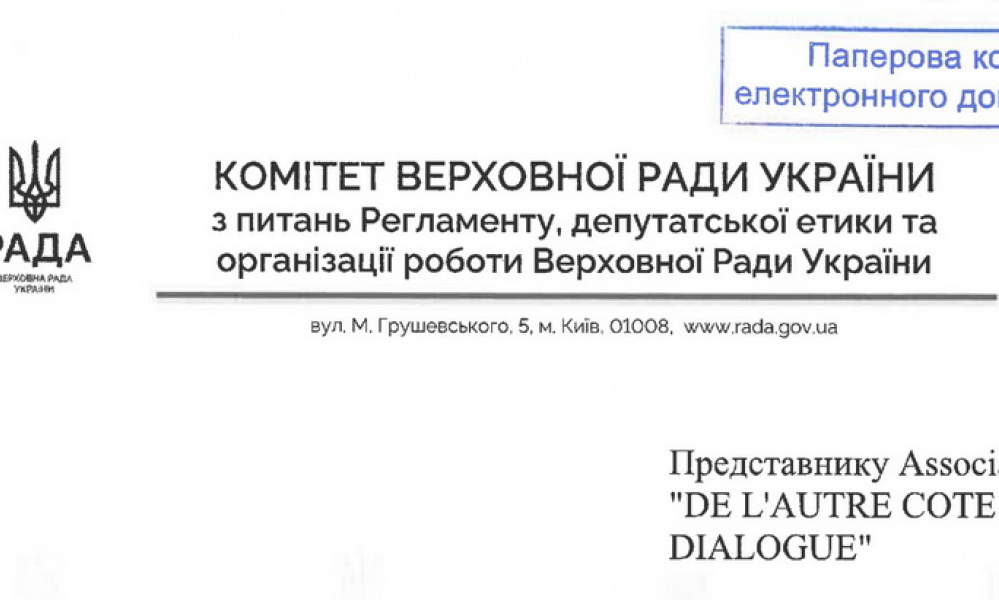
In response to an official Freedom of Information request filed by the “ARGENTUM” news agency on August 20, 2026, the leadership of the Dnipropetrovsk RMA claimed the requested figures did not exist in ready-to-disclose records and that answering would require “generating new information”. The inquiry was subsequently downgraded to the regional Department of Social Protection.

Act 4. Document No. 6041/0/192-26: The Collapse of State Resettlement

The formal response from the Department of Social Protection of the Dnipropetrovsk Regional State Administration dated September 8, 2026 (Ref. No. 6041/0/192-26), signed by Department Director Olena Kryshen, provides unvarnished accounting of the shelter infrastructure.

The official figures contradict public assertions of state-backed care:

  1. A State Resettlement Rate of 1.5%:

Since August 21, 2024, the transit facility in Pavlohrad processed 61,386 individuals (28,444 arriving from Donetsk region and 32,942 from Dnipropetrovsk region). State and municipal authorities managed to secure long-term accommodations for only 932 people. The remaining 98.5% of evacuees were left to navigate the private commercial rental market entirely on their own.

  1. 285 Transit Beds and a 72-Hour Eviction Rule:

Across this entire frontline region, the state maintains only 5 transit centers with a combined capacity of 285 beds. The authorized duration of stay is capped at up to three days. Once those 72 hours expire, evacuees must vacate the premises. Meanwhile, long-term Temporary Accommodation Centers (MTPs) in the Pavlohrad district (719 beds) are at 100% capacity.

  1. The Railway Hub Filter:

Through the primary transit hub at 15 Vokzalna Square in Dnipro, 4,342 people arrived since the start of 2026. Over eight months, only 25 individuals were placed in longer-term shelters or public dormitories—less than 0.6% of arrivals. As of September 1, merely 6 families (8 children) remained at the facility.

  1. The Kryvyi Rih Deficit: Self-Funded Tenancy Over State Support:

Among families with children evacuated during the spring and summer of 2026 who relocated to Kryvyi Rih, 2,111 families rent housing using personal savings, 1,208 shelter with acquaintances or relatives, and only 60 families secured public temporary housing. In the rural community of Slov'yanka, 3,300 displaced individuals were pushed into private arrangements, while local authorities accommodated only 5 families—by dispatching them hundreds of kilometers away to Berehove in the Zakarpattia region.

  1. Hospitalization as a Substitute for Social Welfare:

Due to the absence of specialized assisted-living homes, frail and solitary elderly evacuees are redirected into the healthcare system. Through the transit facility at 53 Serhiy Nihoian Avenue in Dnipro alone, 315 individuals were placed into municipal hospitals for indefinite nursing care. In Verkhnodniprovsk, 14 out of 17 arriving displaced persons were admitted directly to general hospital inpatient wards.

Furthermore, the department offered no response to formal inquiries regarding whether the state tracks the status of evacuated families one, three, or six months following departure from transit centers, or how schooling and nutrition programs are maintained for evacuated children for the 2026/2027 academic year. The administrative tracking system simply does not record them.

Accountability for the Evacuation Conveyor

The structural dynamic is clear. On one side, military officials and police mandate the departure of thousands of families under legal compulsion, despite regional state shelter reserves providing no more than 72 hours of temporary accommodation.

On the other side, political operators and affiliated funds leverage this distress, deploying a white Volkswagen Transporter bearing “VPO UKRAINE” logos and improper UK plates registered to a long-scrapped foreign SUV. Video clips are edited, social metrics climb, fuel invoices are written off against donor grants, and media profile is leveraged to pursue appointments in prospective ministries.

Yet the moment video recording ceases and the post appears online, a strict clock begins ticking for the individuals involved: exactly three days in a transit shelter. At the 73rd hour, displaced families step out onto municipal sidewalks with their belongings, joining the 98.5% of unassisted citizens whom the state left to secure their own survival.

Editor's Note:

To determine the origin of the Volkswagen Transporter bearing license plate AJ54 USE, the legal grounds of its border crossing, the legitimacy of operating under falsified plates, and the issuance of military travel permits within operational zones, journalists from the “ARGENTUM” news agency have filed formal Freedom of Information requests with the State Customs Service, the National Police of Ukraine, the Ministry of Social Policy, relevant military commands, and the Donetsk Regional Military Administration. We will report on their findings in subsequent investigative reports.

ГАРЯЧІ НОВИНИ
Sep 9, 2026, 7:53:51 AM

In post-Soviet states, attitudes toward the Soviet Union remain among the most sensitive and divisive issues. For some, the Soviet past represents the memory of a powerful state, large-scale industrialization, education, science, and social welfare. For others, it stands as a symbol of political repression, shortages, a lack of freedom, and a closed system. However, the real problem arises when this immensely complex history is reduced to a single dismissive label—"sovok"—without any willingness to understand why this system took the shape we know in the first place.

Виталий Походенко Sep 9, 2026, 7:53:51 AM

In post-Soviet states, attitudes toward the Soviet Union remain among the most sensitive and divisive issues. For some, the Soviet past represents the memory of a powerful state, large-scale industrialization, education, science, and social welfare. For others, it stands as a symbol of political repression, shortages, a lack of freedom, and a closed system. However, the real problem arises when this immensely complex history is reduced to a single dismissive label—"sovok"—without any willingness to understand why this system took the shape we know in the first place.